LoRA Fine Tuning Architectures: Advanced Guide to Enterprise AI Deployment

Enterprise LoRA fine-tuning architecture showing enterprise training data flowing through dataset preparation, frozen base LLM, LoRA adapter training, adapter registry, and production inference.

Many organizations successfully deploy Retrieval-Augmented Generation (RAG) for dynamic knowledge retrieval but eventually discover that retrieval alone cannot teach a model proprietary reasoning patterns, company-specific terminology, structured output formats, or internal coding conventions. RAG excels at surfacing relevant context from vector databases, yet the base model continues to generate responses using its pre-trained behavior rather … Read more

GraphRAG Architecture for Enterprise AI: Building Knowledge Graph Retrieval Systems Beyond Vector Search

Microsoft GraphRAG architecture diagram comparing local search using entity-level graph traversal with global search using community summaries for enterprise knowledge retrieval.

Most enterprises deploying Retrieval-Augmented Generation systems quickly discover that vector search alone cannot handle complex organizational knowledge. GraphRAG architecture for enterprise AI combines knowledge graphs with vector embeddings to enable multi-hop reasoning, relationship-aware retrieval, and hierarchical query strategies that traditional semantic similarity approaches cannot achieve. Microsoft’s GraphRAG implementation represents a production-grade reference architecture that extracts … Read more

Enterprise Semantic Caching AI: Reduce LLM Costs with Vector-Based Query Reuse

Enterprise semantic caching AI architecture showing user query, embedding model, vector database cache layer, cache hit or miss routing, LLM processing, and response generation with reduced token usage and lower AI costs.

Enterprise AI adoption is moving quickly from experimentation to production. Customer support bots, internal copilots, document assistants, sales enablement agents, compliance chatbots, and workflow automation systems are no longer small proof-of-concept tools. They are becoming always-on infrastructure. That shift creates a new financial problem: every repeated user question can trigger a fresh large language model … Read more

Programmatic Document Generation: Architecting Scalable Markdown-to-PowerPoint Pipelines for Enterprise AI Systems
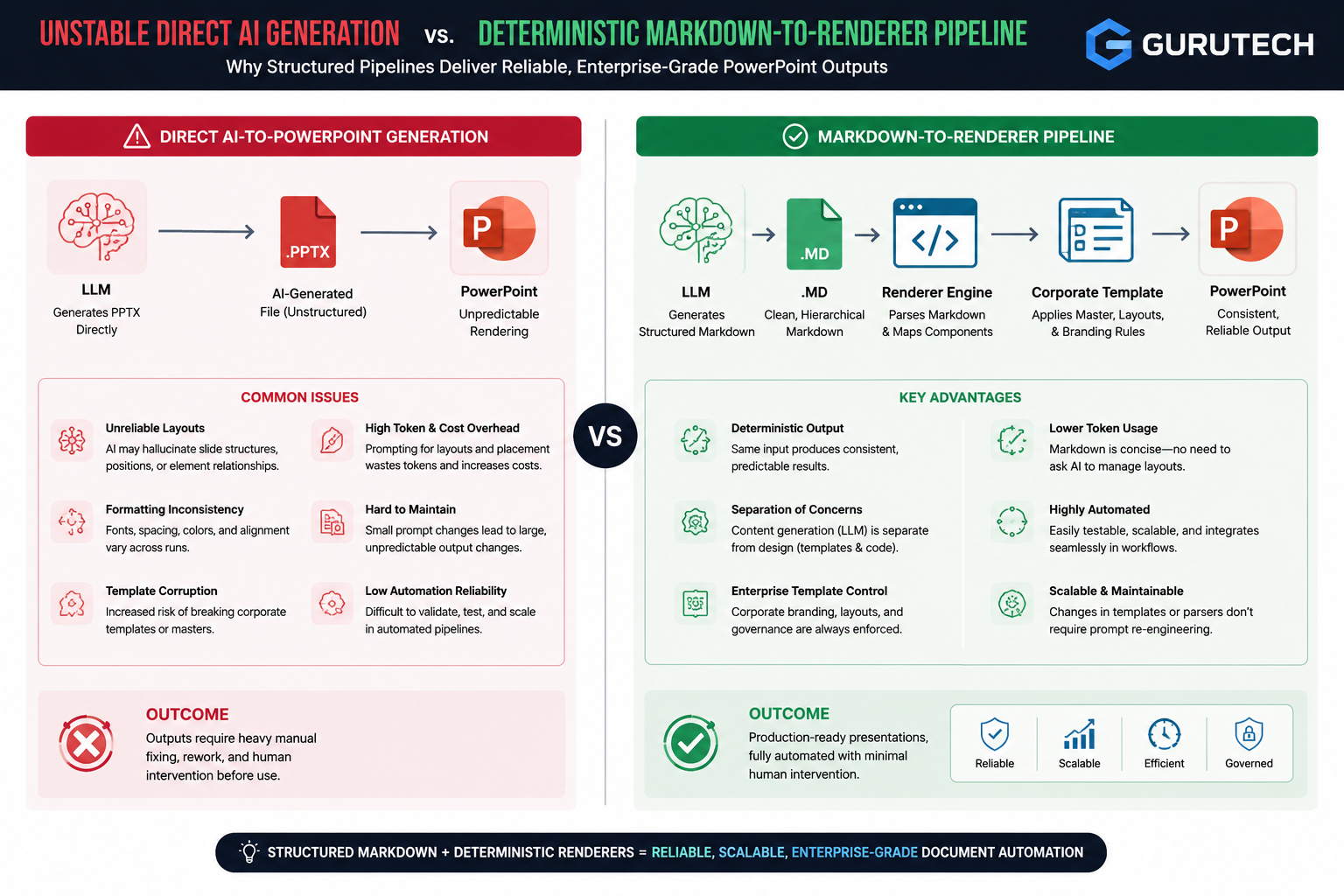
Technical comparison infographic showing unstable direct AI-generated PowerPoint rendering versus deterministic markdown-to-renderer document automation pipelines. programmatic document generation, markdown to powerpoint automation, AI presentation automation, deterministic rendering pipeline, enterprise AI workflows, python-pptx, AI document generation, markdown renderer, automated reporting pipeline, PowerPoint automation

Most enterprise AI stacks today suffer from a critical last-mile gap: outputs from language models, retrieval systems, and orchestration layers still require manual formatting into presentation decks, reports, and client deliverables. This guide continues the pipeline started in Advanced AI Document Parsing: once messy PDFs, scanned files, and enterprise reports have been converted into structured … Read more
AI Document Parsing Explained: Building Clean RAG-Ready PDF Ingestion Pipelines

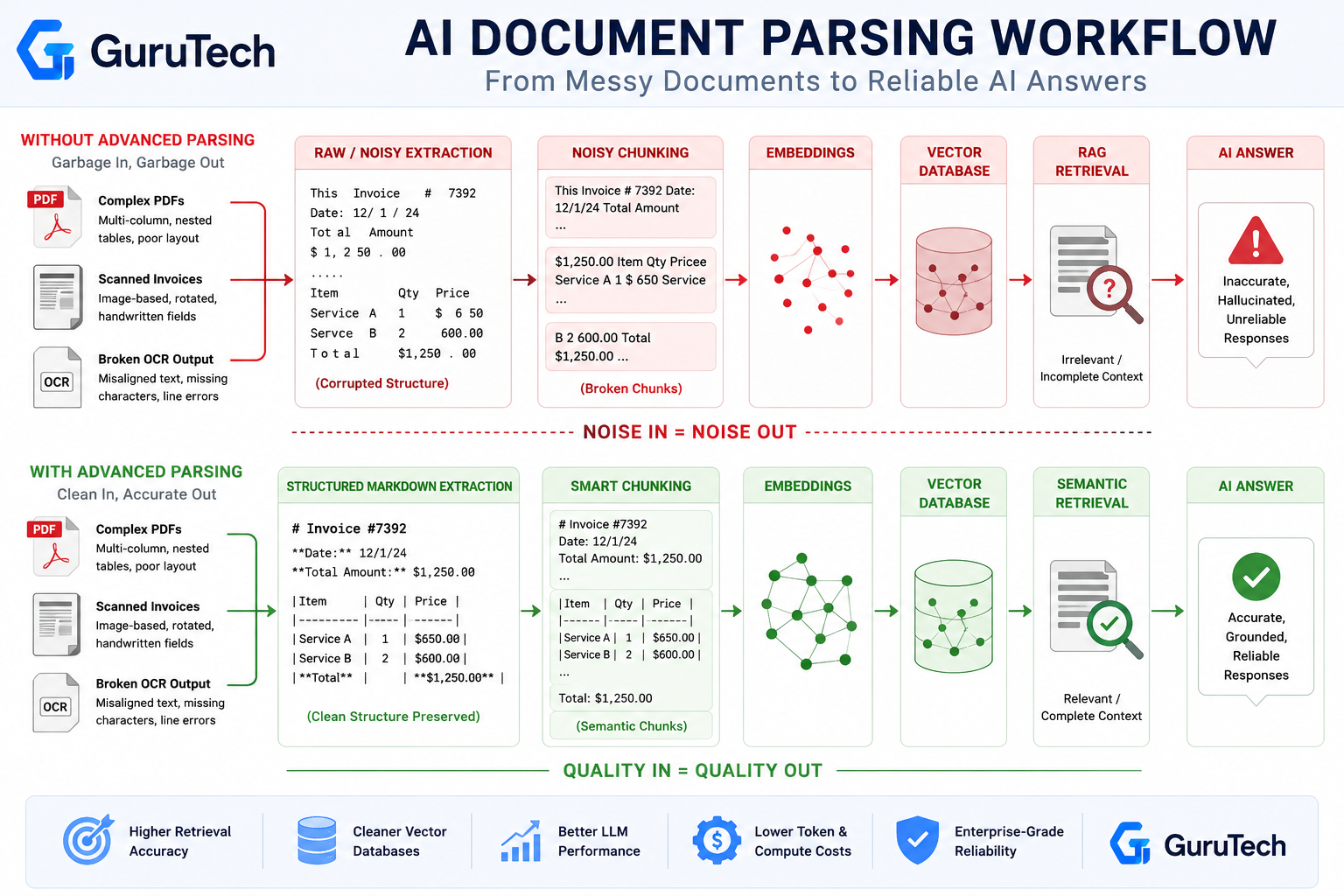
GuruTech infographic showing AI document parsing workflow converting messy PDFs and broken OCR into structured markdown, vector embeddings, semantic retrieval, and reliable AI-generated answers.

Enterprise AI systems fail upstream. Before embeddings reach vector stores or semantic routers query knowledge bases, raw documents pass through ingestion pipelines where corruption begins. PDFs arrive with embedded OCR layers containing invisible misaligned text. Scanned invoices contain rotated tables that standard parsers cannot reconstruct. Legacy contracts mix handwritten annotations with multi-column layouts that break … Read more

Effective Strategies to Reduce AI API Costs using Smart Model Routing (2026 Guide)

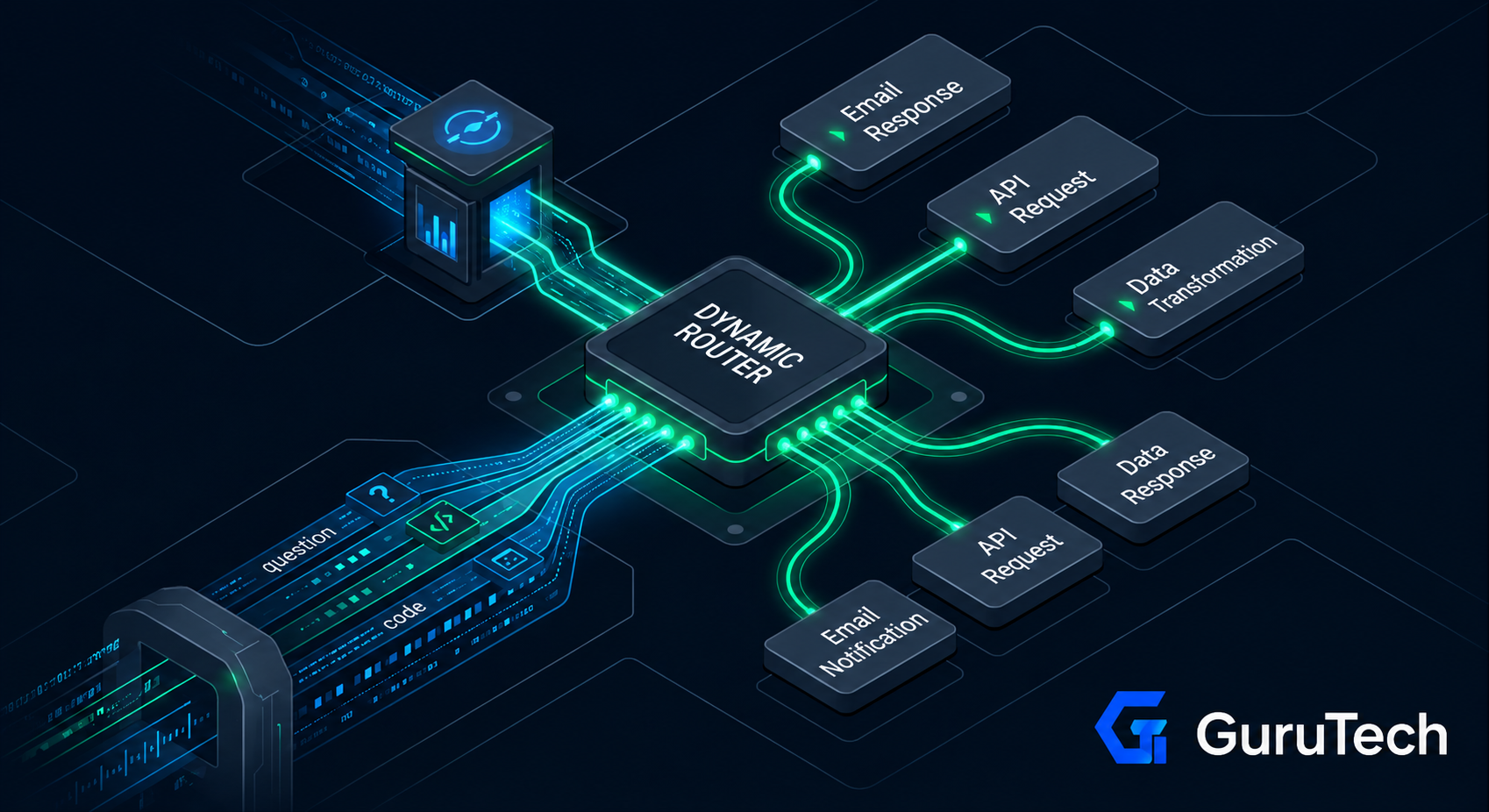
AI semantic routing architecture showing dynamic model routing between low-cost and premium AI models to reduce API costs and optimize automation workflows.

AI API costs are becoming one of the largest expenses for teams running automation workflows in 2026. A single agent session can become surprisingly expensive once prompts, context, tool calls, and output tokens are counted together. Workflows that seemed affordable during testing can quickly scale to hundreds or thousands of dollars per month in production. … Read more

Deploying Agentic AI Systems in Production: Practical and Reliable Architecture, Workflows, and Real-World Use Cases

Agentic AI systems architecture in a production deployment environment

Most agentic AI systems work in demos—and fail in production. The challenge isn’t getting an AI agent to run once. It’s getting it to run reliably, predictably, and safely under real-world conditions where cost, data integrity, and system stability matter. Moving AI agents from prototype to production requires a fundamental shift in how we think … Read more

The rise of the AI-accelerated engineer: 6 Powerful strategies to build robust systems

Senior software engineer using AI tools to design and build production systems through an AI-accelerated workflow

The AI-Accelerated Engineering Workflow Explained Most engineers using AI today are faster—but not necessarily better. AI can generate code. It cannot take responsibility for it. The real divide in modern software development is no longer between those who can code and those who cannot. It’s between engineers who rely on AI to generate output, and … Read more

Best AI Automation Tools for Business in 2026 (Complete Guide)

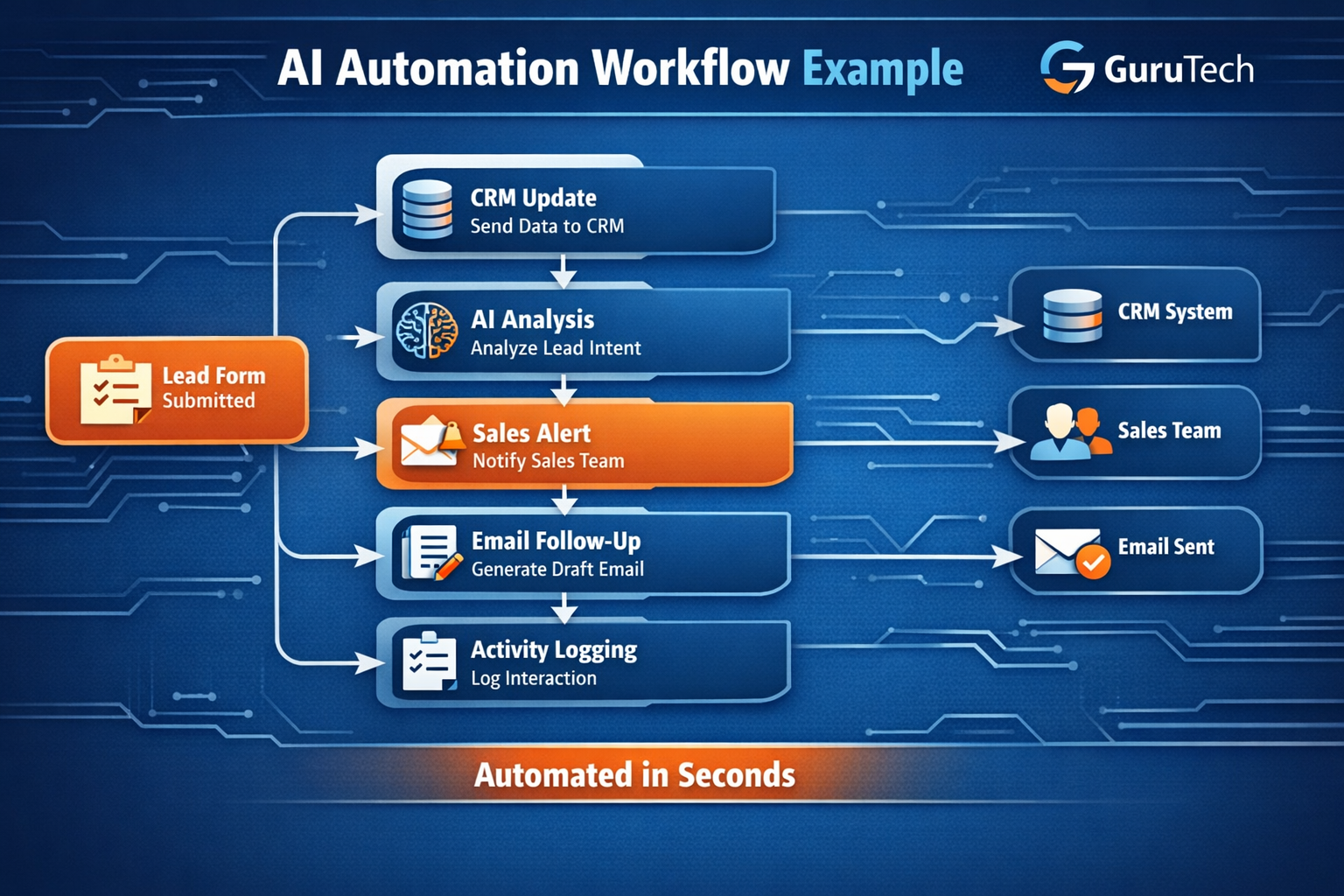
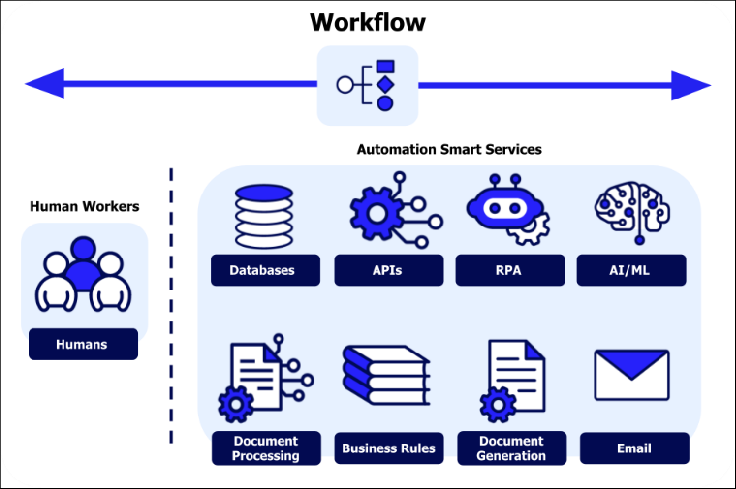
AI automation tools for business workflow diagram

Artificial intelligence is no longer just a writing assistant or chatbot. In 2026, businesses are using AI automation tools to handle repetitive work, connect apps, speed up decision-making, and reduce manual effort across marketing, sales, support, operations, and reporting. The biggest advantage does not come from using AI once in a while. It comes from … Read more

Powerful Guide to Automating Daily Tasks with AI (Save Time Every Day)

automate daily tasks with AI workflow diagram

AI automate daily tasks by reducing repetitive work, improving productivity, and helping you build smarter daily systems in 2026. Artificial intelligence is no longer just something people use for fun, testing, or occasional writing help. It has become a practical productivity tool that can assist with emails, planning, research, summaries, content creation, task management, and … Read more